
Electronics for a physical product
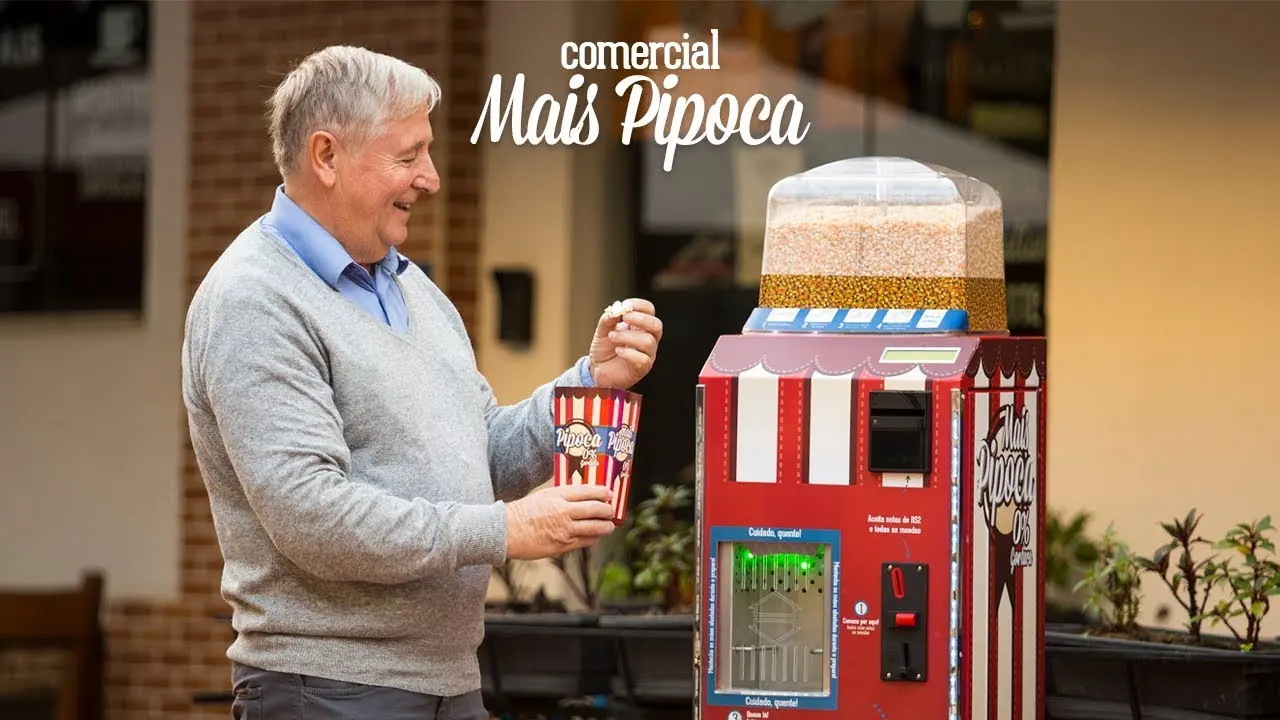
In 2015, I designed the electronics for Mais Pipoca’s popcorn vending machine. This was an embedded product problem: the controller had to coordinate a real dispensing process, communicate status and behave predictably as a machine used by customers. The result was built and worked.
My involvement lasted two and a half years. Beyond circuit work, I helped the team organize the industrialization structure needed to move from a working machine toward repeatable production. That work connected design choices to assembly, testing and the practical demands of operating equipment outside a lab.
The hardest challenge was understanding the dynamics of popcorn popping well enough to reproduce the ideal popping curve in software. The machine was not simply an electronic switch: its control behavior had to reflect how the popping process unfolded. Translating that physical behavior into a repeatable software-controlled cycle became the most distinctive engineering problem in the project.
What the case demonstrates
A vending machine concentrates many engineering disciplines in one product: control logic, electromechanical interfaces, payment and user interaction, fault handling, safety and service access. Bringing those parts together is different from building an isolated prototype. It requires designing for the complete operating cycle and the people who manufacture and maintain the machine.
A contemporaneous product video shows the Mais Pipoca machine being presented. It provides public context for the product; my role and the technical work in this article are my own first-person account.
Mais Pipoca product demonstration (2016)UTFPR repository — 2018 vending-machine project study
From electromechanical concept to a repeatable machine
- 01
Customer interface
Selection, payment state and clear feedback.
- 02
Control electronics
Coordinate machine states and supervise operation.
- 03
Dispensing system
Sequence the heating and popcorn delivery cycle.
- 04
Production & service
Assemble consistently, test the unit and support it in the field.
Functional blocks shown at a product level; this is not a reproduction of the Mais Pipoca schematic.
A candid account of the commercial outcome
The business did not sustain its commercial operation. From my perspective, that outcome reflected challenges in the operating and management model around the machine, not a claim that the engineering never worked. Building a functional product is necessary, but it does not by itself establish durable unit economics, distribution, replenishment, service coverage or business execution.
For this portfolio, the useful lesson is to describe both sides accurately: the electronics were designed, the machine was built and operated, and the commercial venture ultimately ended. I do not present the product’s technical operation as proof that the business succeeded.
Why I include the project
The experience strengthened my ability to take embedded systems into physical products and help establish the processes around production. It also reinforced a lesson I use in later work: engineering milestones and business milestones must be tracked separately, with clear owners for both.